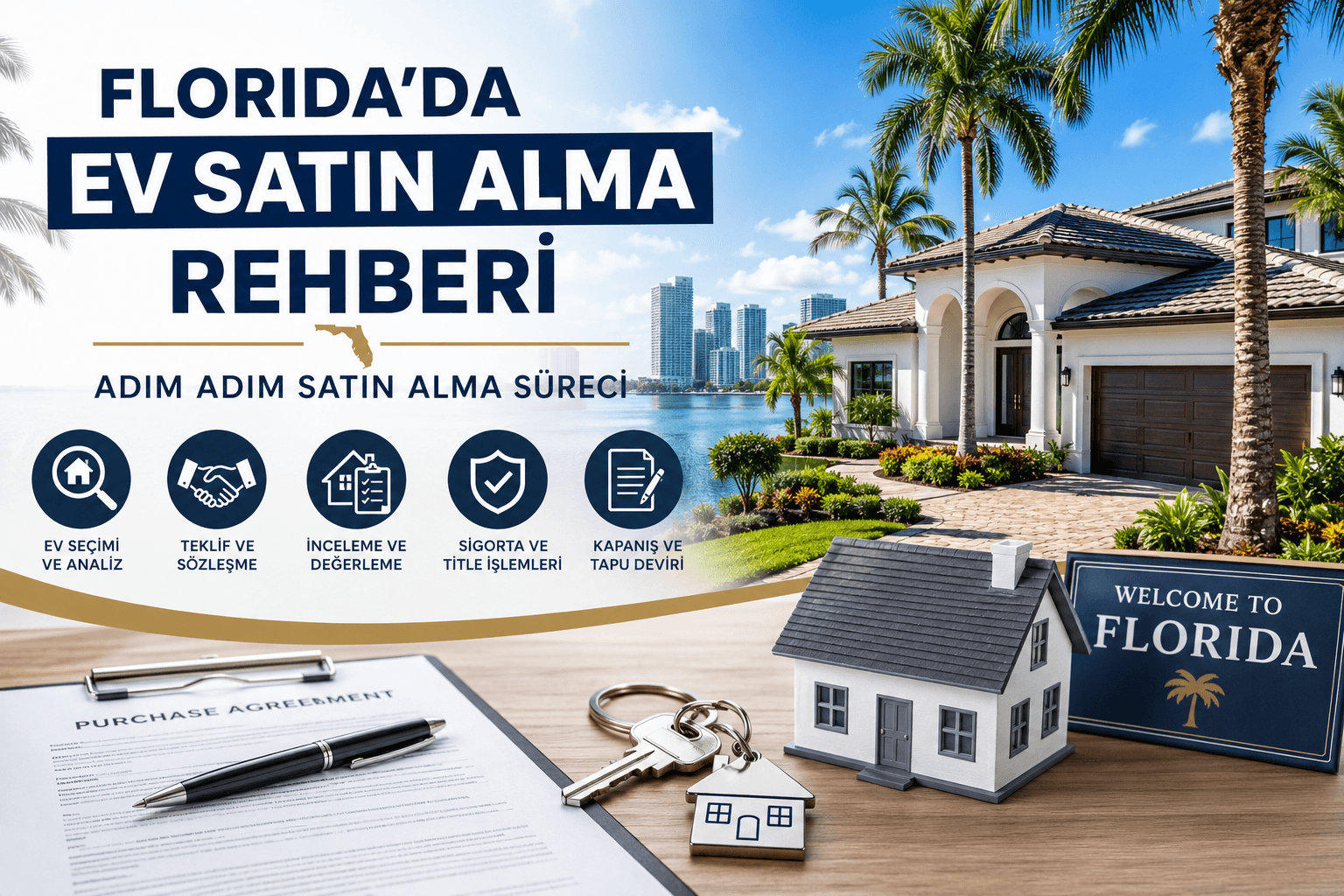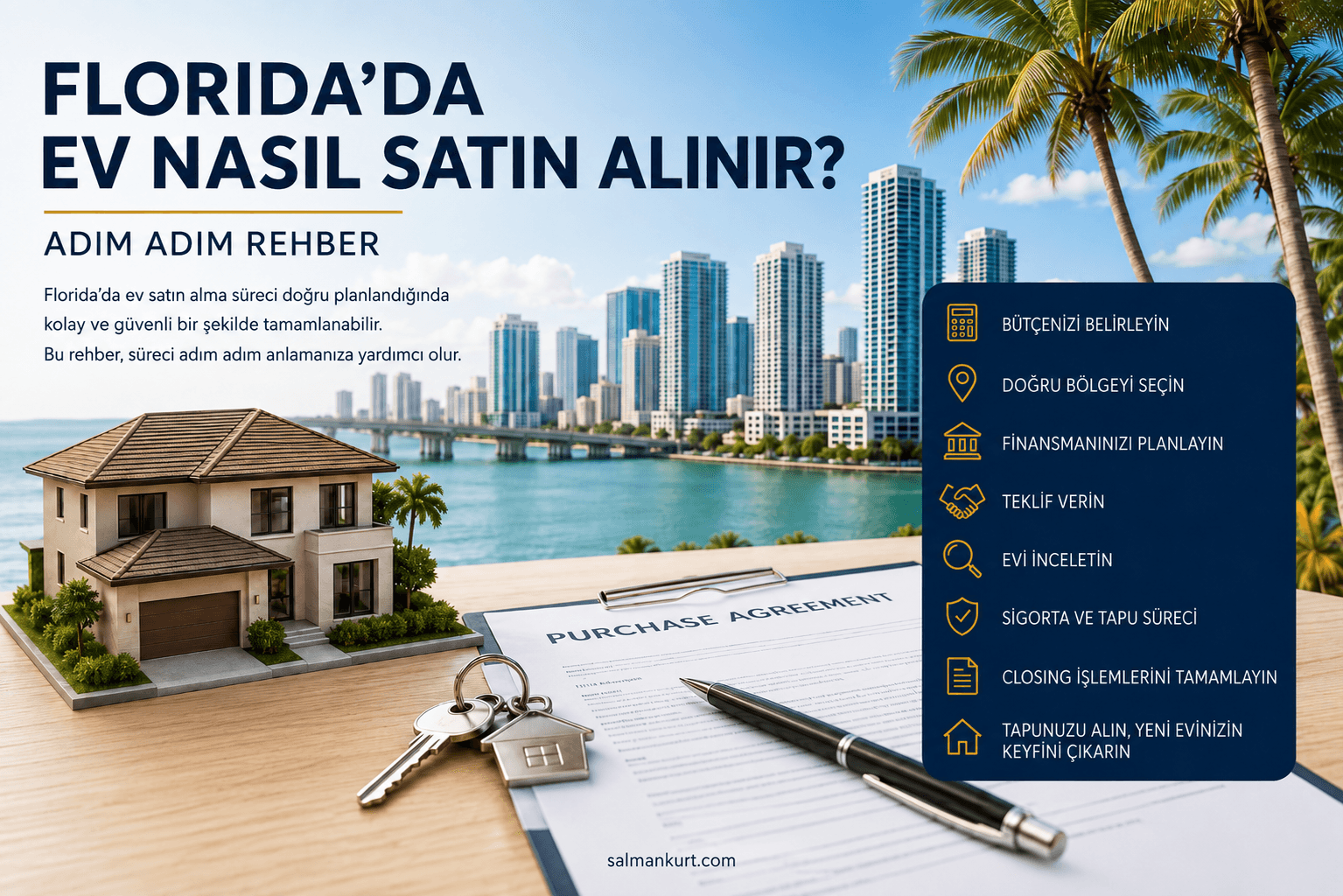
How to Buy a Home in Florida: A Step-by-Step Guide
How to Buy a Home in Florida: A Step-by-Step Guide
Florida offers a wide range of residential and investment opportunities across cities such as Miami, Orlando, Tampa, Jacksonville, Davie and Fort Lauderdale.
The Florida home-buying process may differ from the process in other countries. Purchase contracts, escrow deposits, inspections, appraisals, title searches, insurance and closing must all be managed carefully.
With appropriate planning, international buyers may consider purchasing a primary residence, vacation home or rental investment property in Florida.
1. Determine the Purpose of the Purchase
The first step is to decide how the property will be used.
Common objectives include:
- A primary residence
- A long-term rental investment
- A vacation or second home
- A short-term rental property
- A long-term capital appreciation investment
- A retirement property
The purpose of the purchase directly affects the city, neighborhood and property type that should be considered.
A buyer looking for a vacation home near Orlando’s attractions will have different priorities from an investor seeking a long-term rental condominium in Miami.
2. Calculate the Total Budget
The listing price is not the only cost associated with purchasing a Florida property.
Buyers should also plan for acquisition expenses and ongoing ownership costs, which may include:
- Purchase price
- Down payment
- Mortgage expenses
- Home inspection
- Appraisal
- Title search
- Title insurance
- Closing costs
- Property taxes
- Homeowners insurance
- Flood insurance, when appropriate
- HOA or condominium fees
- Repairs and maintenance
- Property management
A high monthly rent does not automatically produce a strong investment return. Net income should be calculated after deducting all ownership and operating expenses.
3. Decide Between Cash and Mortgage Financing
A Florida property can be purchased with cash or mortgage financing.
Buyers planning to use financing should review their financial position and obtain mortgage pre-approval when possible before beginning a serious property search.
The U.S. Consumer Financial Protection Bureau recommends that buyers determine their budget, prepare the necessary financial documents and compare Loan Estimates from multiple lenders.
Foreign-national mortgage applications may require:
- Passport and identification
- Proof of address
- Bank statements
- Income documents
- Tax returns
- Evidence of assets and reserves
- Documentation showing the source of the down payment
Down-payment, interest-rate, documentation and reserve requirements vary by lender.
4. Select the Right Florida City and Neighborhood
Each Florida market offers a different investment and lifestyle profile.
Miami is known for international buyers, luxury residences and high-rise condominiums.
Orlando is closely associated with tourism, vacation homes and short-term rental opportunities in approved areas.
Jacksonville offers a broad supply of single-family homes and may suit long-term rental strategies.
Tampa combines growing employment centers with a variety of residential neighborhoods.
Davie may appeal to families seeking larger properties and quieter communities within South Florida.
After selecting a city, buyers should compare neighborhoods based on:
- Sale prices
- Rental demand
- Transportation
- School districts
- Development potential
- Safety data
- Flood exposure
- Insurance costs
- HOA restrictions
- Short-term rental rules
5. Work With a Licensed Real Estate Professional
A licensed Florida real estate professional can help identify properties that match the buyer’s budget and objectives.
Professional assistance may include:
- Comparing cities and neighborhoods
- Locating suitable properties
- Reviewing comparable sales
- Coordinating property showings
- Preparing an offer
- Communicating with the seller
- Coordinating inspections
- Communicating with the title and closing teams
- Tracking transaction deadlines
For professional assistance, visit the Florida Real Estate Services page.
6. Review the Property and HOA Documents
Buyers should examine more than the property’s photographs and interior design.
Important areas to review include:
- Age of the building or home
- Roof condition
- Air-conditioning system
- Electrical system
- Plumbing
- Windows and hurricane protection
- Swimming pool
- Moisture and mold exposure
- Previous renovations
- Open permits or violations
- Property-tax history
- Insurance availability
For a condominium or HOA property, buyers should also review:
- HOA fees
- Community rules
- Rental restrictions
- Pet restrictions
- Parking
- Building reserves
- Pending litigation
- Planned special assessments
- Short-term rental policies
High HOA fees and special assessments may materially affect the property’s total cost and net rental return.
7. Submit a Purchase Offer
Once a suitable property has been identified, the buyer submits a written purchase offer.
The offer may address:
- Purchase price
- Escrow deposit
- Financing method
- Inspection period
- Appraisal contingency
- Financing contingency
- Closing date
- Items included with the property
- Allocation of transaction expenses
- Additional terms
Once accepted, the purchase contract may create binding legal obligations. All deadlines, responsibilities and cancellation provisions should be reviewed before signing.
8. Transfer the Escrow Deposit Safely
Following acceptance of the offer, the buyer may be required to transfer an earnest money deposit within the deadline stated in the contract.
The deposit is generally placed into the designated escrow account.
Wire instructions should always be independently verified by telephone or another trusted method. Fraudulent wire instructions are a serious risk in real estate transactions.
Any last-minute change to banking information should be confirmed directly with the title company or closing professional before money is sent.
9. Complete the Home Inspection
A home inspection evaluates the physical condition of the property.
The inspector may review:
- Roof
- Air-conditioning and ventilation
- Electrical system
- Plumbing
- Foundation and structure
- Windows
- Doors
- Moisture and water damage
- Swimming pool
- Appliances
- Safety systems
A problem identified during inspection does not automatically terminate the purchase.
Depending on the contract, the buyer may consider:
- Requesting repairs
- Negotiating a price reduction
- Requesting a closing credit
- Accepting the property in its current condition
- Canceling within an applicable contractual right
Inspection deadlines are established by the contract and should be followed carefully.
10. Complete the Appraisal
Mortgage lenders may require an appraisal.
An appraisal estimates the property’s value for lending purposes. It is not the same as a home inspection.
The inspection focuses on physical condition. The appraisal focuses on value and the lender’s collateral risk.
When the appraised value is below the purchase price, the buyer may need to contribute additional cash, renegotiate the price or proceed according to the appraisal provisions in the contract.
11. Complete the Title Search and Title Insurance Process
A title search examines the property’s ownership history and legal title.
The search may identify:
- Unpaid taxes
- Mortgages
- Liens
- Claims by previous owners
- Undisclosed heirs
- Easements
- Recording errors
- Other title defects
According to the Florida Department of Financial Services, title insurance helps protect the buyer or lender from certain prior claims and debts connected with the property. Florida transactions commonly distinguish between a lender’s title policy and an owner’s title policy.
A title company or qualified attorney may coordinate the title search, escrow funds, closing documents, title insurance and closing.
12. Evaluate Insurance and Flood Exposure
Insurance costs can represent a significant part of the total cost of owning Florida real estate.
Buyers should obtain insurance estimates before the inspection period or other relevant contractual deadlines expire whenever possible.
Homeowners insurance may cover specified risks such as theft, fire and certain storm damage. Actual coverage and exclusions depend on the individual policy.
Flood exposure should be reviewed separately. FEMA’s Flood Map Service Center is the official public source for address-based flood hazard information. FEMA identifies areas beginning with A or V as high-risk flood zones.
Insurance costs may be affected by:
- Property location
- Flood zone
- Roof age
- Building age
- Hurricane-protection features
- Previous claims
- Construction materials
- Coverage limits
- Deductibles
13. Review the Closing Disclosure and Final Documents
For financed transactions, the buyer receives a Closing Disclosure before closing.
The document generally includes:
- Loan amount
- Interest rate
- Monthly payment
- Closing costs
- Taxes
- Insurance items
- Amount due from the buyer at closing
Unexpected fees or differences should be discussed with the lender and closing professional before documents are signed.
The CFPB advises buyers to review closing documents carefully, complete insurance and title requirements and understand the loan terms before signing. Once the closing documents are signed, the buyer becomes responsible for the mortgage obligation.
14. Conduct the Final Walk-Through
A final walk-through is normally conducted shortly before closing.
The buyer should confirm:
- The property remains in the agreed condition
- The seller has removed personal belongings
- Agreed repairs have been completed
- Appliances and major systems are functioning
- No new damage has occurred
- Items included in the contract remain in the property
The final walk-through is not a new home inspection. Its purpose is to confirm the property’s condition immediately before closing.
15. Complete the Closing
Closing is the final stage of the purchase.
During this process:
- Final documents are signed
- Buyer funds are transferred
- Seller proceeds are disbursed
- Mortgage documents are completed
- The deed is prepared
- Recording is completed
- Keys are delivered
Florida’s official title insurance guide explains that, after the transaction conditions are satisfied, the deed transferring ownership to the buyer is recorded in the county’s official records. A new mortgage, when applicable, is also recorded.
After closing, the buyer should securely retain copies of the contract, Closing Disclosure, deed, title insurance policy, insurance records and mortgage documents.
Tax Considerations for Foreign Buyers
International buyers should review U.S. tax obligations related to rental income, ownership and a future sale.
When a foreign person sells U.S. real estate, FIRPTA withholding may apply. According to the IRS, the general withholding amount may be 15% of the amount realized unless an exception or special rule applies.
Some foreign property owners may require an Individual Taxpayer Identification Number. The IRS states that foreign individuals who are not eligible for a Social Security Number may use an ITIN for qualifying real estate tax matters.
A qualified U.S. tax professional should review the ownership structure, rental income and future sale strategy.
Conclusion
The Florida home-buying process can be managed effectively when each stage is planned carefully.
The principal steps include:
- Establishing the budget
- Selecting the right city and neighborhood
- Choosing cash or mortgage financing
- Finding a suitable property
- Preparing the offer and contract
- Completing inspection and appraisal
- Reviewing insurance
- Completing title search and title insurance
- Reviewing closing documents
- Recording the deed
For professional guidance, visit the Florida Real Estate Services page.
Frequently Asked Questions
Can Turkish citizens buy property in Florida?
Generally, yes. Current federal and Florida requirements, tax obligations and financing conditions should nevertheless be reviewed for each buyer.
Is a Green Card required to buy a Florida property?
A Green Card is generally not a universal requirement for owning real estate. Purchasing property, however, does not automatically provide a visa, Green Card or right to reside in the United States.
Can foreign buyers obtain a mortgage in Florida?
Some lenders offer foreign-national mortgage programs. Down-payment, income-documentation and reserve requirements vary by lender.
Is a home inspection mandatory?
An inspection may not be legally mandatory in every transaction. It is nevertheless an important part of evaluating the property’s physical condition and potential repair costs.
What does title insurance protect?
Title insurance helps protect the buyer or lender against certain ownership defects, prior debts and third-party claims connected with the property’s history.
Does buying a Florida home provide a Green Card?
No. An ordinary residential purchase does not automatically provide immigration status or residency rights.
This article is provided for general informational purposes and does not constitute legal, tax, financial or investment advice.
For more guides and investment content, visit the Florida Real Estate Blog.
Salman Kurt
Executive insights, global real estate intelligence, and luxury tourism perspectives.